
When the Computer Tried Being a Mind, It Almost…
Philosopher Andy Clark offered to explain the popular computational theory of mind to Robert Lawrence Kuhn — but then a gap appearedLast week, University of Sussex cognitive philosophy prof Andy Clark was Robert Lawrence Kuhn’s guest on Closer to Truth on the question, “Is the Mind Like a Computer?” (September 9, 2024, 6:47 min)
Does the mind work like a computer? Are mental processes the product of computation in that information processing is the essence of mind or consciousness? This view is popular among computer scientists but rejected by most philosophers. What can we learn about the mind by considering this computational theory?
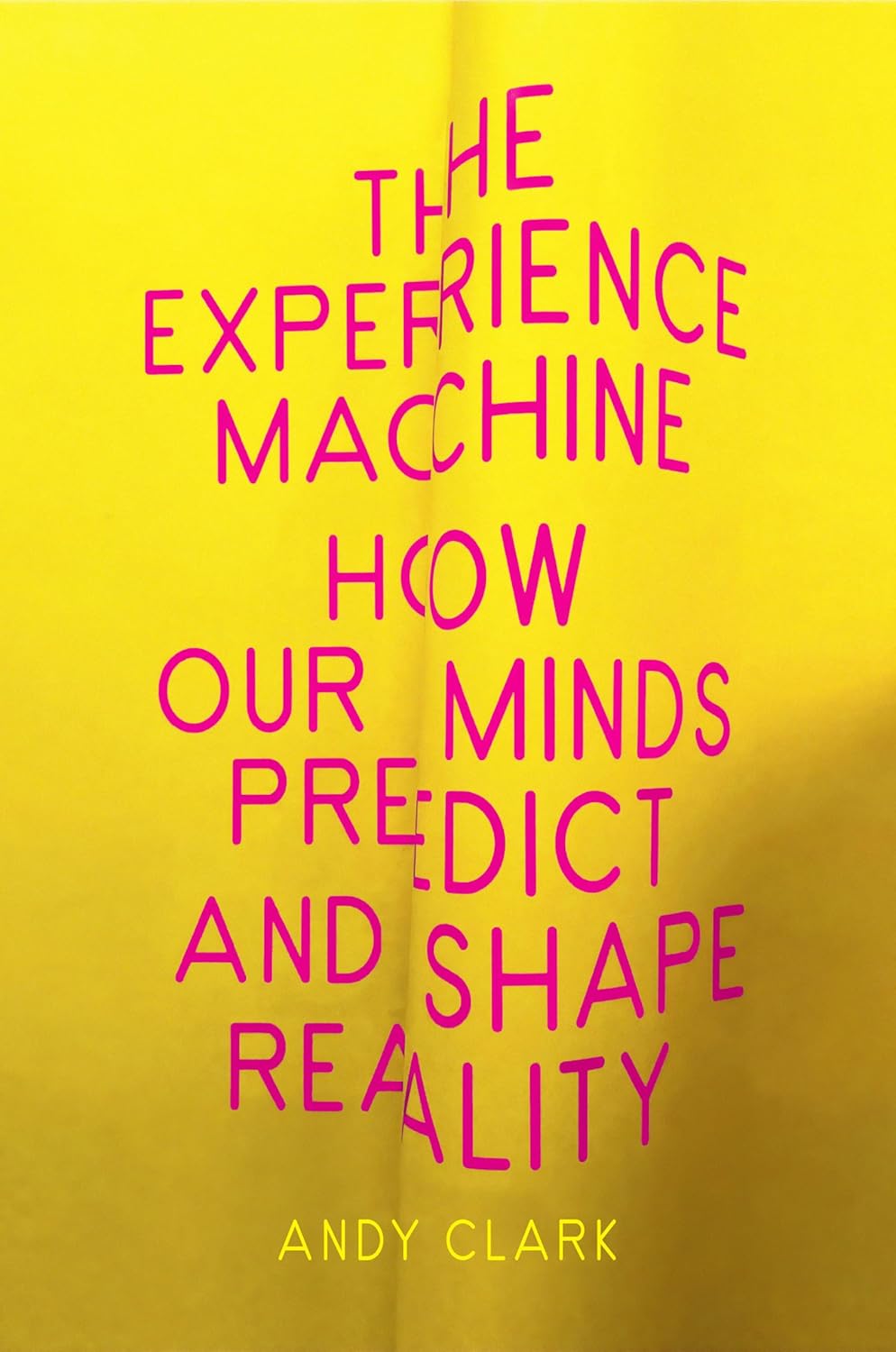
Clark, the author of The Experience Machine: How Our Minds Predict and Shape Reality (Pantheon 2023), sees the brain as a “powerful, dynamic prediction engine, mediating our experience of both body and world.” That’s the computational theory of mind. Does it work?
From the transcript, where Kuhn asks Clark to talk about computational theory of mind:
Clark:… I am a [1:51] computationalist so I think the question isn’t Is the brain a computer? but What kind of computer is the brain?
And it’s a very special [2:00] sort of computer, solving very special kinds of problems. It’s a probabilistic machine and what it does is deeply entwined with moving the body around so as to simplify the problems that it’s trying to solve.
This is pretty different [2:12] to our original picture of a big Mainframe (that) sat in the corner doing its stuff. I think those are the important differences — though not in whether it’s a computer or not but just what’s it doing and how’s it doing it.
Kuhn then asks for something more specific about the mind.
Clark: You know, I think, at the bottom level, it [3:02] could be zeros and ones. It is just a question of, if you like, What are the interesting program-level descriptions that are being implemented by that underlying structure? And I think once we start to think that, the descriptions at the levels that will matter for the sciences of the mind are descriptions in terms of something like multi-level probabilistic encodings with distributed representation …
So it’s not like a little symbol for a concept like cat but instead it’s a widespread pattern of activity that can be more or less. There doesn’t have to be kind of all or nothing.
Once you start to think [3:40] in those terms, then you’re beginning to look at this sort of very small corner of the class of possible computational mechanisms where I think we humans and biological animals in general live.
So if you think about some of the things we do — like we like to upload stuff and look at it … most [4:00] of our computers don’t do that, you know. They don’t want to print something out and have a look at it and think about it some more. What good’s that going to do with them?
So somehow we have to [4:08] understand that special corner of computational space in which you get real boosts from printing stuff out, if you like, and looking at it.
Indeed, we do have to understand that because that is, specifically, the mind at work. Pressed once again for a “new kind of computational theory of mind,” Clark points to Google’s work on Deep Mind, in which the system accesses external as well as internal resources to solve problems.
And Kuhn presses one more time for more detail on how all this relates to the mind:
Clark: I suppose I think that what’s [5:54] what’s going to happen in the near future is, we’ll begin to see the kind of heavy duty computational stuff like the Deep Mind work beginning to come together with much more biologically informed work from cognitive and computational neuroscience.
So one of the places where [6:11] those traditions meet, I think, is in terms of the recognizing the importance of multi-level downward prediction … we should think about cognition as more like graphics programs than like pattern recognition programs, more like you recognize the patterns by learning how to produce them rather than simply learning how to recognize them.
The problem with the computational theory of mind
 Photo courtesy of Discovery Institute
Admittedly, it’s a short video about a big theory.
Computational theory of mind or computer functionalism, as neurosurgeon Michael Egnor and I point out in The Immortal Mind (Hachette Worthy, June 3, 2025), suffers from a huge weakness: The mechanical steps by which a computer motors through a problem involve nothing that would generate mental states.
But notice that, while we learn some things about modern computer systems, we learn nothing about what actually makes them similar to the operations of the human mind.
A computer does not care, understand, or have an opinion about a problem you are using it to solve — any more than a watch knows what time it is or why that time is significant. That is because computation of any kind is not, by itself, intelligence. It is a tool that humans use to assist intelligence.
Lack of mind is actually one of the things that make the computer so useful. It helps you express yourself. It has no self of its own that might demand personal attention or dispute matters with you.
In some ways, it is useful to compare the workings of the brain with those of a computer. Both brain and computer are electrical systems. Neuronal activity can easily be seen as inputs and outputs according to the rules of neurochemistry.
But the comparison stops with the mind because the mind has thoughts to which computation is blind. As Egnor has been known to point out, “Ironically, as a theory of mind, computer functionalism has one key merit: it is a concise description of what the mind is not.”
