Mind Matters Natural and Artificial Intelligence News and Analysis

CategorySurveillance

finger-touching-phone-with-social-media-concept-and-dark-background-stockpack-adobe-stock.jpg
Finger touching phone with social media concept and dark background

Why Do Some People Try To Poison Big Tech’s Data Well?

Some social media users confuse Big Tech about their interests so as to preserve privacy and rein in relentless marketing campaigns

Here’s an article on a theme you probably didn’t expect to read about in a top tier tech magazine: How to poison the data Big Tech collects about you. It’s certainly evidence of the growing discontent with Monopoly Power and Big Surveillance: Now researchers at Northwestern University are suggesting new ways to redress this power imbalance by treating our collective data as a bargaining chip. Tech giants may have fancy algorithms at their disposal, but they are meaningless without enough of the right data to train on. Karen Hao, “How to poison the data that Big Tech uses to surveil you” at Technology Review (March 5, 2021) Researchers Nicholas Vincent and Hanlin Li presented a paper at the recent Association Read More ›


fast-food-stockpack-adobe-stock.jpg
fast food

What If Government Knows You Ate a Big Mac — and Doesn’t Approve?

One spur to the development of cryptocurrencies is a desire for privacy. And a growing number of citizens of societies dominated by Big Tech feel the need for privacy

That title question is not a crazy notion. It’s already happening in mostly cashless China. The Constitution and the law may not be the barrier that many suppose in America if your personal choices make it possible. We need to talk about the unpublicized implications of a cashless society. Bernard Fickser, whose work we profiled yesterday, thinks that surveillance creep is one of the factors driving the growing interest in cryptocurrencies like Bitcoin and Ethereum. Yesterday we talked about the increasing popularity of Modern Monetary Theory (MMT) — government should just print money to satisfy social demands and then raise taxes to pay for the choices made. A triumph of MMT would intensify the competition between government-issued currencies and cryptocurrencies Read More ›

Computer Hacks of Governments, Hospitals, Firms Increase

Even the ones we depend on are vulnerable. They’re not always anxious to talk about it

It’s not just companies, it’s countries that get hacked these days. Here are some examples from the United States: ➤ The big story was the Solar Winds case last month. One version is that an intern thought that SolarWinds123 was a safe password: At this point though, it’s still uncertain whether the password leak played a role in the SolarWinds hack, CNN noted, which is believed to be the largest foreign intrusion campaign in U.S. history. This month, White House national security adviser Anne Neuberger stated that approximately 100 different companies and nine federal agencies, including the one that oversees the country’s nuclear weapons, had been compromised by foreign hackers. Jody Serrano, “SolarWinds Officials Throw Intern Under the Bus for Read More ›

Machine learning , artificial intelligence , ai, deep learning blockchain neural network concept. Brain made with shining wireframe above multiple blockchain cpu on circuit board 3d render.

Why Oxford’s John Lennox Wrote a Book on AI Promises and Threats

His book 2084 leans on George Orwell’s 1984 but takes its inspiration from C. S. Lewis’s That Hideous Strength

Recently, Walter Bradley Center director Robert J. Marks interviewed Oxford mathematician John Lennox on his latest book 2084: Artificial Intelligence and the Future of Humanity (2020). He focused on why Lennox chose that theme and how far we have caught up with George Orwell’s 1984. Here are some excerpts from the combined interviews in “John Lennox on Artificial Intelligence and Humanity”: https://episodes.castos.com/mindmatters/Mind-Matters-123-John-Lennox.mp3 A partial transcript follows, along with highlights, Show Notes, and Resources: Robert J. Marks (starting at roughly 1:40 min): Many of Orwell’s predictions about communism were proven. So what will be the effects of AI a century later in the year 2084? Replacing George Orwell is Dr. John Lennox who has written 2084: Artificial Intelligence and the Future Read More ›

social-scoring-and-rating-symbol-abstract-3d-illustration-stockpack-adobe-stock.jpg
Social scoring and rating symbol abstract 3d illustration

Face recognition: Is the U.S. Copying China’s Surveillance State?

Although facial recognition (and the resulting “social credit score”) prevail in China, the technology is getting pushback in America

In a recent article, I recounted the story of Dana Kurtbek, who has faced harassment from the DHS and the FBI after facial recognition technology and anonymous reports placed her inside the Capitol Building during the riot on January 6th. By her own account, she never came closer than a mile from the Capitol. She expressed concern to Mind Matters News that the continuing harassment may have resulted from neighbors who disagree with her pro-Trump views reporting her to the federal government. Facial recognition technology and neighbors as informants may sound strange to American ears, but in China, both are essential elements of the Chinese Communist Party’s technocratic regime. In 2014, China unveiled a social credit system that Human Rights Read More ›

like-facebook-3d-box-with-white-background-3d-rendering-stockpack-adobe-stock.jpg
Like facebook 3d box with white background. 3d rendering

Who’s Afraid of Facebook? Maybe We Should All Be More Wary

A whistleblower showed that rules are enforced very unevenly. Facebook allows extremist language to flourish in some venues and censors mainstream speech in others

Facebook is, according to Fortune Magazine, the “dominant social media app,” with $84.2 billion in revenue in 2019, especially after acquiring Instagram. So dominant that government hearings into questionable activities offer mere slaps on the wrist. There is a reason for that, as we shall soon see. Facebook is, of course, a censor but at best a clumsy one. It removed a page by international disease experts critical of the COVID lockdowns, as if they were mere health cranks. Recently, Facebook announced that it plans to continue to take down posts whose claims its fact checkers “deem false” (February 8, 2021). To get some sense of what that means, Facebook censored an article at UnHerd that was critical of the Read More ›

classic-club-sandwich-with-ham-and-bacon-on-a-wooden-board-next-cup-is-a-mixture-of-pickled-miniature-onions-gherkins-tomatoes-gray-background-close-up-stockpack-adobe-stock.jpg
Classic club sandwich with ham and bacon on a wooden board. Next cup is a mixture of pickled miniature onions, gherkins, tomatoes. Gray background. Close-up.

For Five Days There Was Free Expression in China

Then censors blocked the Clubhouse app

In March 2020, Silicon Valley entrepreneur Paul Davidson and former Google engineer Rohan Seth launched their newest app, Clubhouse. The app is an invite-only audio chat app that lets users talk in virtual rooms. These conversations can be one-on-one or they could have an audience of up to 5,000 users (the current room limit in the beta version of the app). The app is only available on the iPhone and, once invited, users must use their actual phone number and Apple ID to join. Each user is only allowed to invite up to five people. The app’s exclusive nature gave it the tantalizing aura of the “next-big-thing” among the tech types. On January 31, Space-X’s Elon Musk made an appearance Read More ›

ring-fire-in-black-stockpack-adobe-stock.jpg
Ring fire in black

AI profs: Beware “Black Ball” Tech That Could Destroy the Planet

Oxford Future of Humanity researchers contemplate a technology with immense destructive powers that is easy to access and use

Nick Bostrom and Matthew van der Merwe of Oxford’s Future of Humanity Institute offer a sticky question: What if we invented a “black ball” technology, one that destroyed human civilization? In the wake of Hiroshima, many people predicted that nuclear technologies would destroy the world. Albert Einstein is purported to have said, “I do not know with what weapons World War III will be fought, but World War IV will be fought with sticks and stones.” However, say Bostrom and van der Merwe, to make nuclear technology work for you, you need to be a nuclear physicist. One might add that radioactive materials also “send messages.” Figuring out what untrusted actors are doing with nukes did not prove to be Read More ›

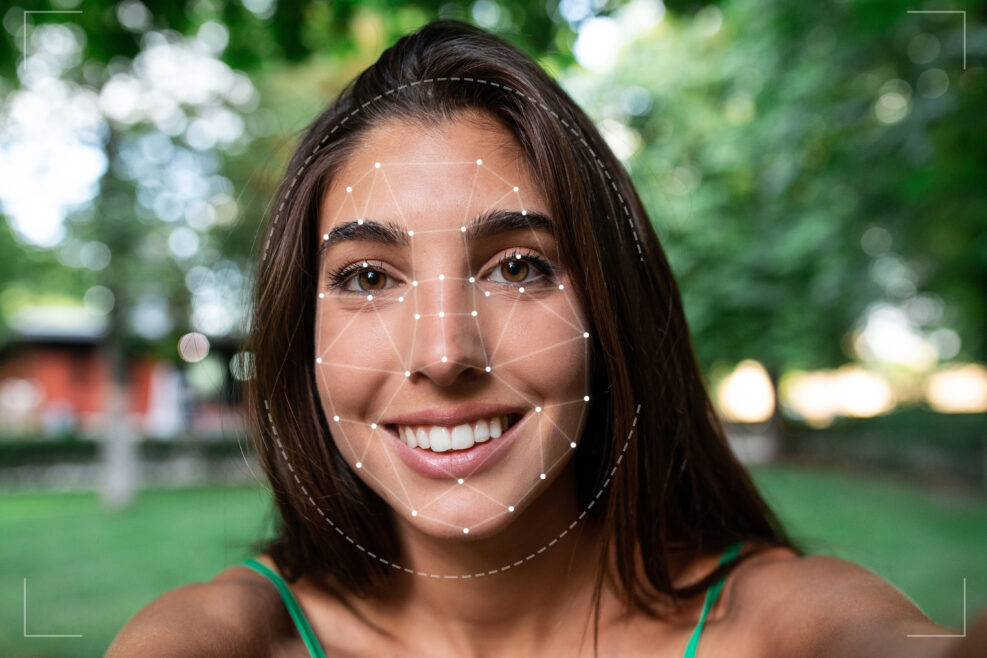
facial-recognition-concept-stockpack-adobe-stock.jpg
facial recognition concept

False Identification: One Woman’s Facial Recognition Nightmare

Government security officials and the ACLU stay mum, despite repeated requests for information, involvement in the Pennsylvania woman’s case

After attending a pro-Trump rally in Washington, D.C., on January 6, a Pennsylvania woman has told media, she has been interrogated by the Department of Homeland Security (DHS) and visited by the FBI. She and her daughter have both been subjected to repeated security screenings before boarding flights. Federal security officials have reportedly claimed that facial recognition technology and anonymous reports place the woman inside the Capitol Building, among those who entered illegally on January 6. She insists she never went near the Capitol, let alone engaged in any illegal activity. Repeated inquiries from Mind Matters News to the DHS and FBI about their targeting of the woman and her daughter have been ignored. So have inquiries to the American Read More ›

kashgar-china-with-more-than-80-of-the-population-made-by-uyghurs-kashgar-displays-a-lot-of-islamic-landmarks-here-in-particular-the-id-kah-mosque-the-biggest-mosque-in-china-stockpack-adobe-stock.jpg
Kashgar, China - with more than 80% of the population made by Uyghurs, Kashgar displays a lot of Islamic landmarks. Here in particular the Id Kah Mosque, the biggest mosque in China

Leaked Police Database: Total Surveillance of China’s Uyghurs

Human Rights Watch notes that many countries engage in human rights abuses, but “more than any other government, Beijing has made technology central to its repression.”

Human Rights Watch has released its 2021 annual report of global human rights abuses in 2020. In his keynote article, Executive Director Kenneth Roth said “this has been the darkest period for human rights in China since the 1989 massacre that ended the Tiananmen Square democracy movement.” The report outlines several ways that the Chinese Communist Party has repressed Chinese citizens. Among those are the Uyghurs, an ethnically Turkish majority Muslim people living in Xinjiang Uyghur Autonomous Region in western China. The CCP continues to use every means, including massive technological surveillance, to control the Uyghur population. This is the second year that China has been one of the biggest offenders of human rights. Last year’s keynote article pointed out Read More ›

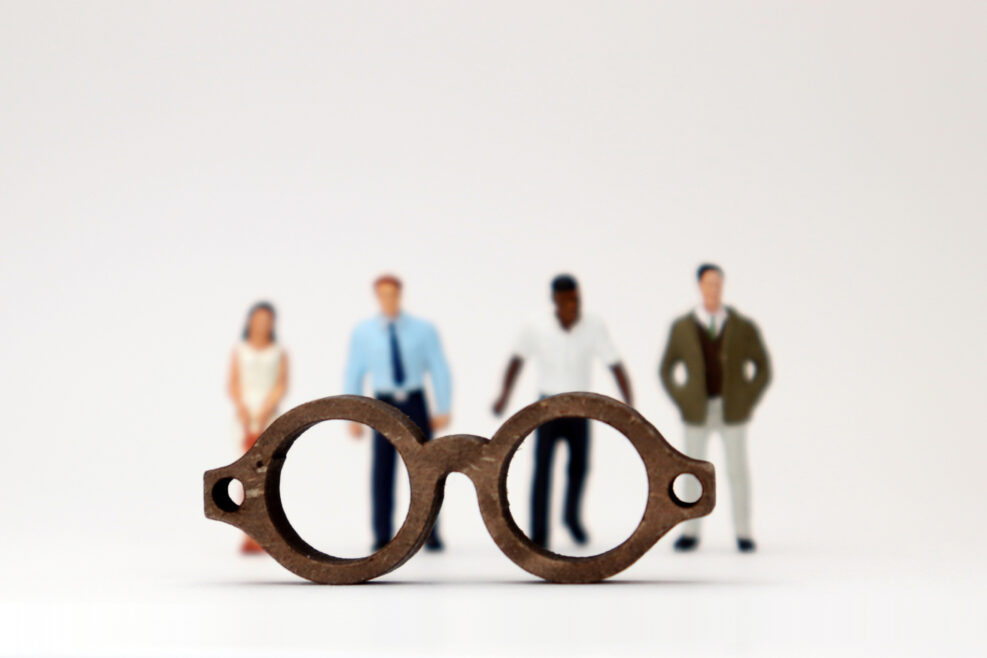
the-concept-of-biased-views-judged-by-appearances-various-miniature-people-standing-behind-the-glasses-stockpack-adobe-stock.jpg
The concept of biased views judged by appearances. Various miniature people standing behind the glasses.

How Bias Can Be Coded Into Unthinking Programs

MIT researcher Joy Buolamwini started the project as a trivial “bathroom mirror” message

Coded Bias, a new documentary by 7th Empire Media that premiered at the Sundance Film Festival in January 2020, looks at the ways algorithms and machine learning can perpetuate racism, sexism, and infringements on civil liberties. The film calls for accountability and transparency in artificial intelligence systems, which are algorithms that sift large amounts of data to make predictions, as well as regulations on how these systems can be used and who has access to the data. The documentary follows the path of MIT researcher Joy Buolamwini. Buolamwini took a class on science fiction and technology in which one of her assignments was to create a piece of technology that isn’t necessarily useful but is inspired by science fiction. Buolamwini Read More ›

mosquito-stuck-in-honey-stockpack-adobe-stock.jpg
Mosquito stuck in honey

Hi Tech and China: The Long Game re Spying in the United States

The relationship between California’s Eric Swalwell and Fang Fang could be a thriller. But they say it really happened

An investigative report from news site Axios reveals that Christine Fang (better known as Fang Fang), a fundraiser for Representative Eric Swalwell (D.–California), not only interacted with political elites in California but cultivated relationships with two Midwestern governors. She is also accused of being a spy for China from 2011 to 2015. This story adds to the growing evidence that China is playing the long-game of influencing American politics: Start with promising figures at the bottom, not at the top: The case demonstrates China’s strategy of cultivating relationships that may take years or even decades to bear fruit. The Chinese Communist Party knows that today’s mayors and city council members are tomorrow’s governors and members of Congress.” Bethany Allen-Ebrahimian and Read More ›

3d-rendering-of-a-futuristic-robot-dog-stockpack-adobe-stock.jpg
3D rendering of a futuristic robot dog.

Questions Dog the Future of Police Robots

Robots will have all the human judgment flaws but none of the capacity to change

Here’s a snippet from a recent New York Times article on the apparent first use of police robots in the United States in 2016, to kill Micah Xavier Johnson. Johnson had been discharged from the U.S. Army under unclear circumstances and in July of that year he shot five officers dead. Like almost all police robots in use today, the Dallas device was a straightforward remote-control platform. But more sophisticated robots are being developed in labs around the world, and they will use artificial intelligence to do much more. A robot with algorithms for, say, facial recognition, or predicting people’s actions, or deciding on its own to fire “nonlethal” projectiles is a robot that many researchers find problematic. The reason: Read More ›

digital-world-stockpack-adobe-stock.jpg
digital world

China’s Eyes Are Watching Africa Closely

In exchange for help with high-tech communication systems, China gets to install mass surveillance technology

Depending on who you talk to, the twenty-year relationship between China and several countries in the African Union has been described as everything from mutually beneficial to asymmetric and dysfunctional right down to exploitative and neo-colonialist. Recent pre-COVID-19 surveys indicate that citizens of several African nations see their country’s interaction with China as largely positive. But if some African science fiction writers are any indicator, others see a dystopian future. The current onslaught of high-tech surveillance technologies from China provides a chance to compare the two views. Recently, I have written about racial tensions between African nationals and local government in Guangzhou amidst the COVID-19 pandemic and about how the pandemic has worsened African countries’ debt crisis, particularly due to Read More ›

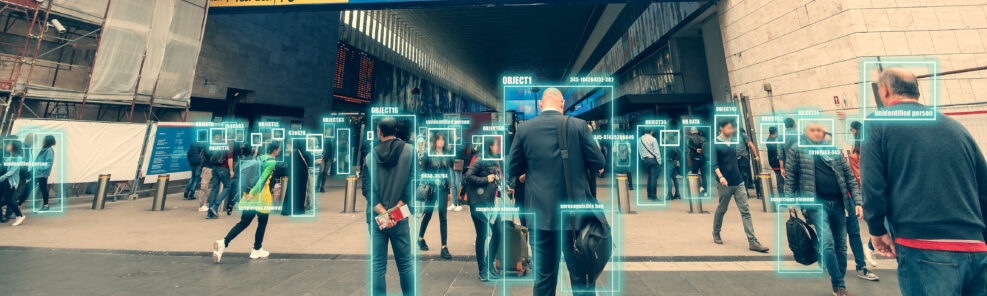
ai-identify-person-technology-for-recognize-classify-and-predict-human-behavior-for-safety-futuristic-artificial-intelligence-surveillance-and-data-collection-of-citizens-through-city-cameras-stockpack-adobe-stock.jpg
Ai identify person technology for recognize, classify and predict human behavior for safety. Futuristic artificial intelligence. Surveillance and data collection of citizens through city cameras.

The Information We Just Give Away Obliterates Privacy

Privacy may turn out to be one of the biggest political issues of the new decade

A story came to light at VICE in 2017, that the CIA spied on people through their smart TVs. Without getting into those weeds, note this conventional warning offered by manufacturers: “Please be aware that if your spoken words include personal or other sensitive information, that information will be among the data captured and transmitted to a third party through your use of Voice Recognition.” An old birdwatcher’s tip: If you can see them, assume they can see you. If the internet is wide open to us, we are potentially wide open to the internet. Here are three surveillance issues worth pondering, about the systems we take for granted: ➤ Alexa employees listen in: Amazon.com Inc. employs thousands of people Read More ›

with-the-global-spread-of-the-new-coronavirus-pneumonia-an-automated-line-of-disposable-medical-masks-makes-the-masks-ready-for-an-epidemic-24-hours-a-day-covid-19-outbreak-stockpack-adobe-stock.jpg
With the global spread of the new coronavirus pneumonia, an automated line of disposable medical masks makes the masks ready for an epidemic 24 hours a day, COVID-19 outbreak

COVID-19 Response Exposes Racism in China, amid Harmony Claims

The lid blew off when African leaders broke the accustomed silence imposed by their dependence on Chinese high-tech loans

The coronavirus COVID-19 epidemic has exposed two longstanding ugly problems: underlying racist views of Africans living in China and the burden debt to China lays on several African countries. The key flashpoints creating tension between China and Africa are 1) Mistreatment of citizens of African countries living in China, particularly in Guangzhou, capital of Guangdong province (pictured) and 2) Beijing’s position on granting debt relief to countries in Africa so they can direct resources to dealing with the coronavirus. In one incident, Nigeria’s speaker of the House of Representatives, Femi Gbajabiamila, posted a video of himself summoning Chinese Ambassador Zhou Pingjian to his office where he expressed his displeasure about a Nigerian man being evicted from his home. While nobody Read More ›

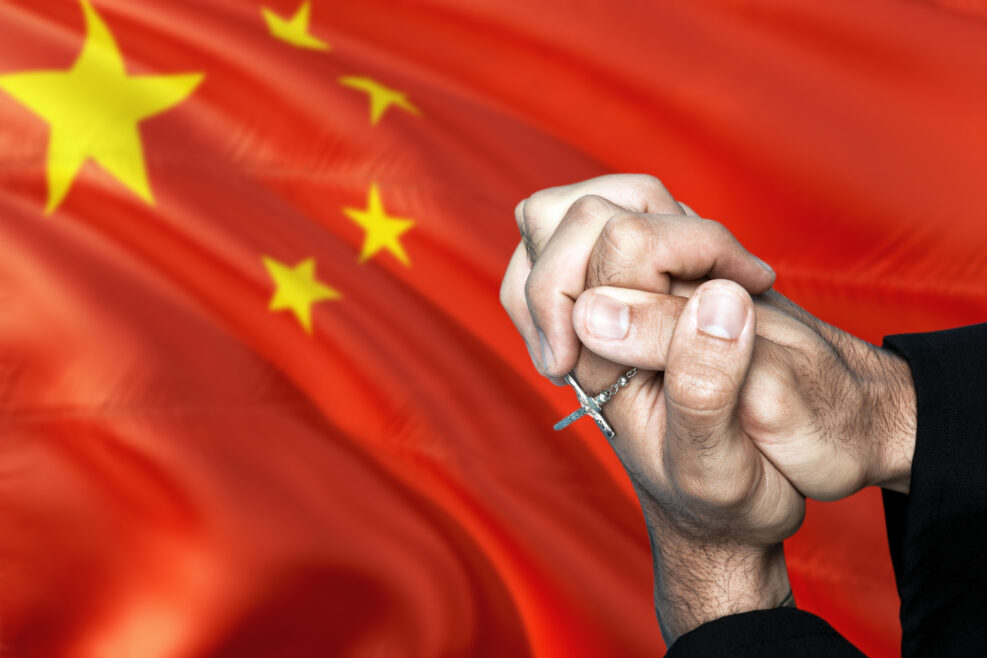
china-flag-and-praying-patriot-man-with-crossed-hands-holding-cross-hoping-and-wishing-stockpack-adobe-stock.jpg
China flag and praying patriot man with crossed hands. Holding cross, hoping and wishing.

How China’s Technocracy Uses the Pandemic to Suppress Religion

The pandemic provided a pretext to install surveillance equipment in churches and surveil believers online

The COVID-19 pandemic has brought out the ways that technology can lead either to greater accessibility or greater oppression. The Chinese Communist Party (CCP) is now using the same technologies that have given many people around the world access to religious materials and church services during the pandemic to forcibly stop religious gatherings and restrict the distribution of religious materials within China. Although the CCP is officially atheist, over 60% of the population adheres to a recognized religion; 30.8% practice Chinese folk religions, 16.6% Buddhism, 7.4% Christianity, 4.2% ethnic religion, and 1.8% Islam. Authentic numbers may be higher, given the risk of punishment for practicing certain religions in China. The Chinese government has persecuted, tortured, and imprisoned Falun Gong members Read More ›

-stockpack-unsplash.jpg

China: COVID-19’s True History Finds an Unlikely Home — GitHub

The Chinese Communist party, rewriting the COVID-19 story with itself as the hero, must reckon with truthful techies

For a brief window of time at the beginning of 2020, China’s internet censors didn’t block stories about Wuhan and COVID-19, the coronavirus. Caixin, a widely-read news magazine, published a multi-page investigative report on everything leading up to the outbreak, including the way in which the provincial authorities in Hubei, of which Wuhan is the capital, suppressed knowledge of the virus. Fang Fang, an award-winning novelist, kept a Wuhan diary online on Weibo, which was recently published as a book in the U.S. (HarperCollins 2020). For that short time, comments on the coronavirus were not being censored (Wired) at WeChat. Many people were thus able to vent their frustrations and pay their respects when 32-year-old ophthalmologist and whistleblower Li Wenliang Read More ›

department-store-shop-class-luxury-near-the-red-bridge-historical-buildings-of-saint-petersburg-in-the-background-the-city-and-st-isaacs-cathedral-dome-of-golden-color-in-the-evening-at-sunset-stockpack-adobe-stock.jpg
Department store shop class luxury, near the Red Bridge, historical buildings of Saint-Petersburg. In the background the city and St. Isaac's Cathedral dome of golden color, in the evening at sunset.

Russia Aims to Close the Technology Gap With the United States

Independent since 1991, the vast nation offers a government version of Silicon Valley culture

In this week’s podcast, “AI development in Russia, Part 1,” Walter Bradley Center director Robert J. Marks talks with Samuel Bendett about Russia’s struggles to develop AI for entrepreneurship and free enterprise, rather than military uses. It turns out to be mainly a cultural struggle, as historic institutions must adapt to an environment where market dominance is more important than military dominance. Mr. Bendett, who is fluent in Russian and English, is an advisor to the Russia Studies Program and the Center for Autonomy and Artificial Intelligence of the CNA Adversary Analysis Group. And how is Russia faring? https://episodes.castos.com/mindmatters/Mind-Matters-103-Samuel-Bendett.mp3 From the transcript: (Show Notes, Resources, and a link to the complete transcript follow.) Robert J. Marks (pictured): What I want Read More ›

group-of-friends-using-smartphones-to-communicate-in-social-media-concept-of-a-generation-of-millennials-who-are-online-all-the-time-warm-hipster-filter-stockpack-adobe-stock.jpg
Group of friends using smartphones to communicate in social media. Concept of a generation of millennials who are online all the time. Warm hipster filter.

The Social Dilemma: You’re Not the Customer, You’re the Product

A new Netflix documentary explores the techniques used to explore, then shape and sharpen, our attitudes, values, and beliefs

What is truth? This question has likely been pondered by man for as long as man has been able to ponder. How do you know that what you read or hear is true? How do you know that what you think is true? Why is it that people with different worldviews or belief systems can look at the exact same raw objective data and interpret it in radically different ways? The answers to these questions are important to “know”, insofar as anyone can know anything within a reasonable degree of certainty. However, in our society today, it is becoming more and more difficulty to determine what is true––with any degree of certainty. A recent 90-minute Netflix documentary, The Social Dilemma, Read More ›